
Dementia Care in Enfield
Living with dementia can change how someone experiences everyday tasks, conversation and familiar routines. Angels Caring Care can discuss practical support at home, with an individual assessment to establish the needs and support we can safely provide.
Support shaped around everyday life.
A dementia diagnosis does not tell us everything about a person. Their interests, relationships, habits and choices still matter. An enquiry is an opportunity to explain the things they enjoy, how they prefer to communicate and which parts of daily life have become more difficult. This helps the conversation focus on the person rather than assumptions about a diagnosis.
Support at home may involve gentle prompts, company or help with agreed daily routines. The right arrangement depends on the individual’s circumstances and the level of assistance needed. Families and authorised representatives can contribute useful information, while the person’s involvement, consent and relevant legal arrangements remain central to planning.
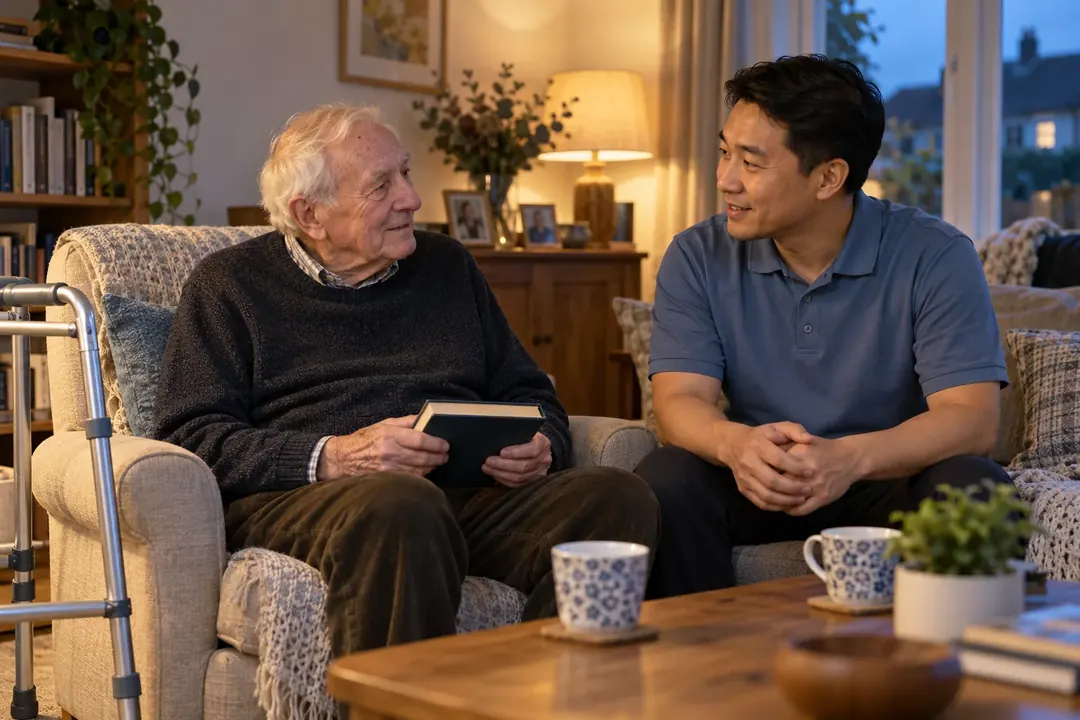
Practical support with familiar routines, gentle prompts and everyday activities, shaped around the person living with dementia.
What support can include.
The help provided is agreed following assessment and recorded in your individual care plan.
 Agreed in your care plan
- 01
Gentle prompts for agreed everyday routines and activities.
- 02
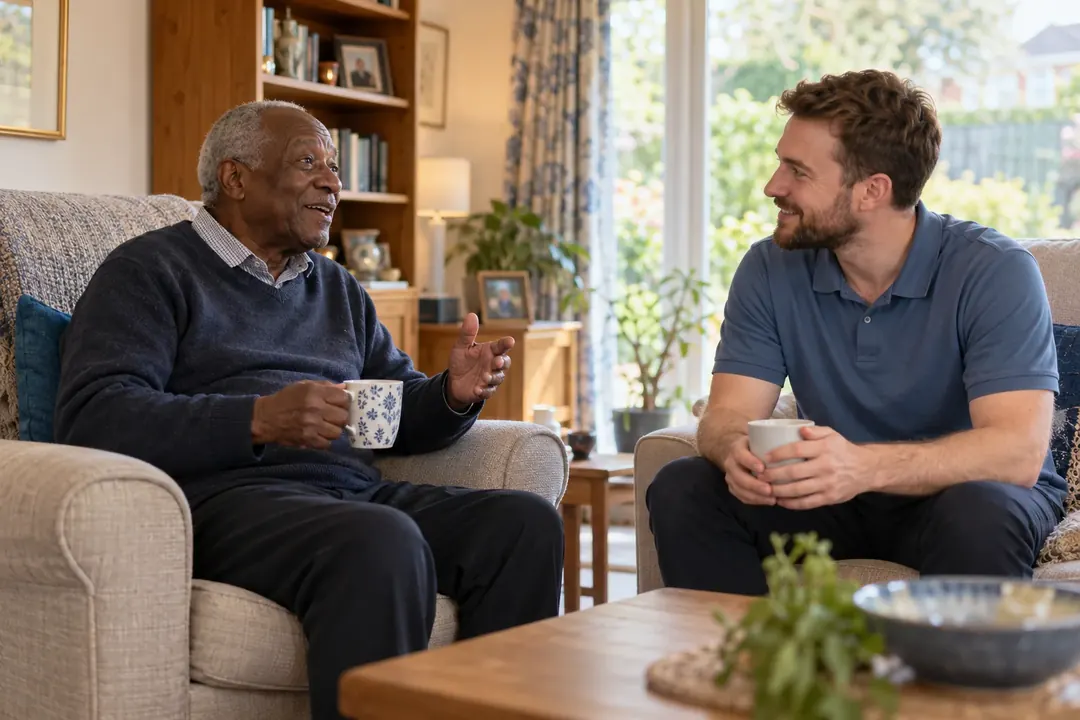
Company and patient conversation at a comfortable pace.
- 03
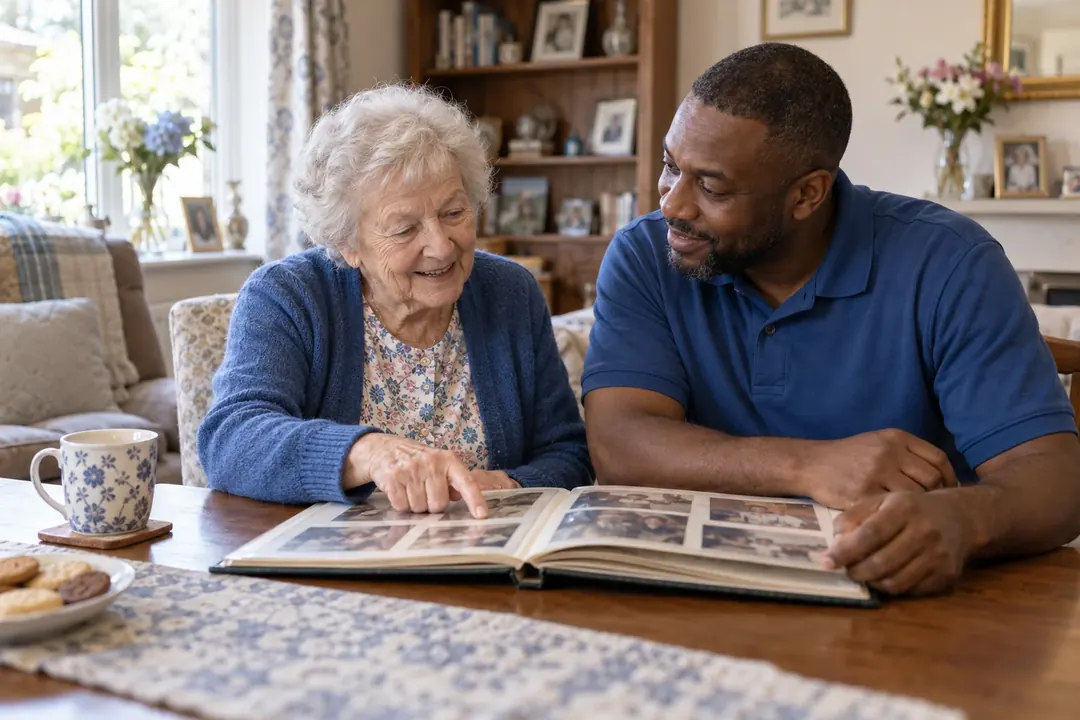
Time for familiar music, photographs or enjoyable activities.
- 04
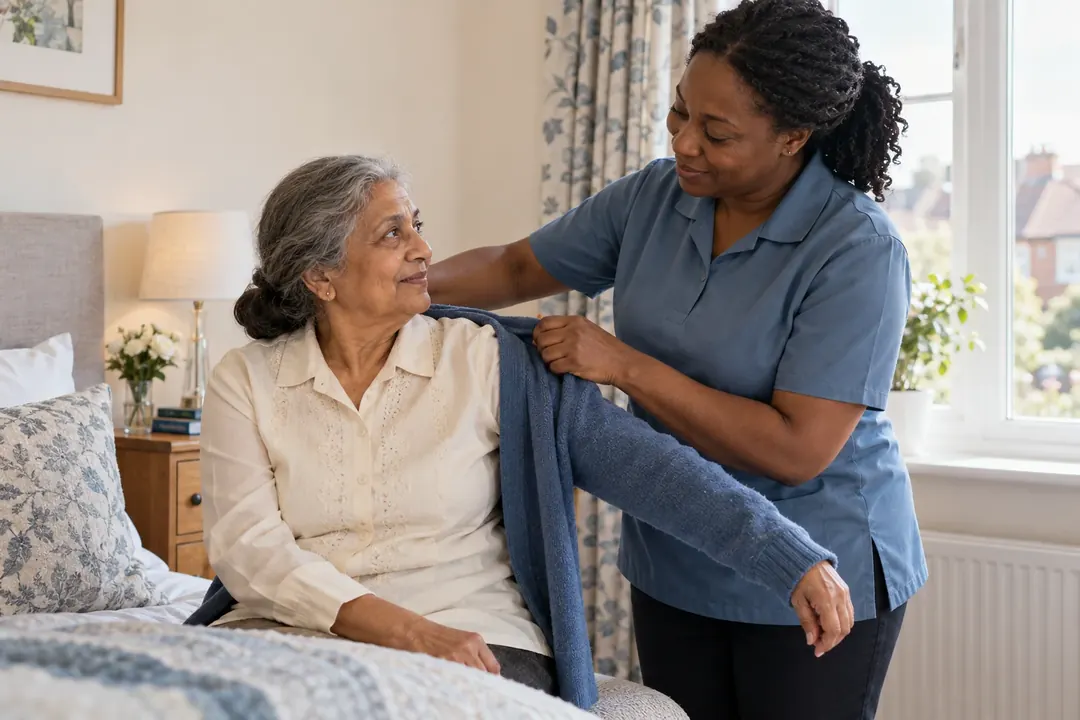
Assessed help with washing, dressing and other personal care.
- 05
Practical assistance with agreed meals and drinks.
- 06
Support maintaining contact with family and familiar people.

Who may find this helpful?
Every person is different. Our team will confirm whether we can meet the identified needs and explain current availability.
A person living with dementia whose daily routine would benefit from practical assistance.
Someone who needs more time or support to take part in conversations and activities.
A family considering how home visits could fit around existing support.
People planning ahead and wanting to understand possible care arrangements.
- 01
Learn about the person
Tell us about everyday habits, meaningful interests, preferred communication and any existing care arrangements. It is helpful to discuss what already works well and what causes concern, rather than only listing tasks that need completing.
- 02
Agree a suitable care plan
The assessment considers the help required and whether Angels can meet those needs. Proposed visits, practical tasks and communication arrangements should be clear before care starts. Complex needs or clinical care require separate consideration and may involve other professionals.
- 03
Adapt to changing needs
Allowing time, listening carefully and using familiar interests can help make interactions more comfortable. If the person’s needs or circumstances change, the care arrangements need discussion and review. The original plan should not be assumed to remain suitable indefinitely.
Good to know.
Anything else? Our office team will talk it through with you.
Book a free consultationIs dementia care the same as nursing care?
No. This page describes practical care and support with daily life. It does not promise clinical treatment, diagnosis or specialist nursing. Tell the team about any health care needs so the service’s suitability and required professional input can be discussed.
Can support include favourite hobbies or familiar routines?
Yes, these are useful things to discuss during the assessment. Activities should reflect the person’s interests and abilities, with their choice respected. They are opportunities for enjoyment and involvement, not a treatment or a promise to improve memory.
Can family members help explain the person’s preferences?
Family can provide useful background about routines, interests and communication. Their involvement and access to information must be agreed appropriately, taking account of the person’s wishes, consent and any relevant legal authority.
How do we know whether care at home is suitable?
Begin with a consultation and assessment. The team needs to understand daily needs, risks, current support and the proposed arrangement before confirming suitability. Home care is not automatically appropriate for every person or every stage of dementia.
Further information and helpful resources+
These organisations provide general information. Your Angels care arrangements are discussed separately through assessment.
Let’s discuss the support you need.
Tell us about the care you’re considering. We can explain the assessment process, practical arrangements and how costs are agreed.
 Personal Care
 Companionship
 Household Support
 Medication Support
 24-Hour & Live-in Care
 Supported Living